Humanoid robots have entered the spotlight. From headlines and demos to viral videos, the idea of general-purpose robots working alongside humans is capturing the imagination of the industry. But beyond the hype, a harder question remains: what does it take to deploy humanoid robots that actually work in real industrial environments?
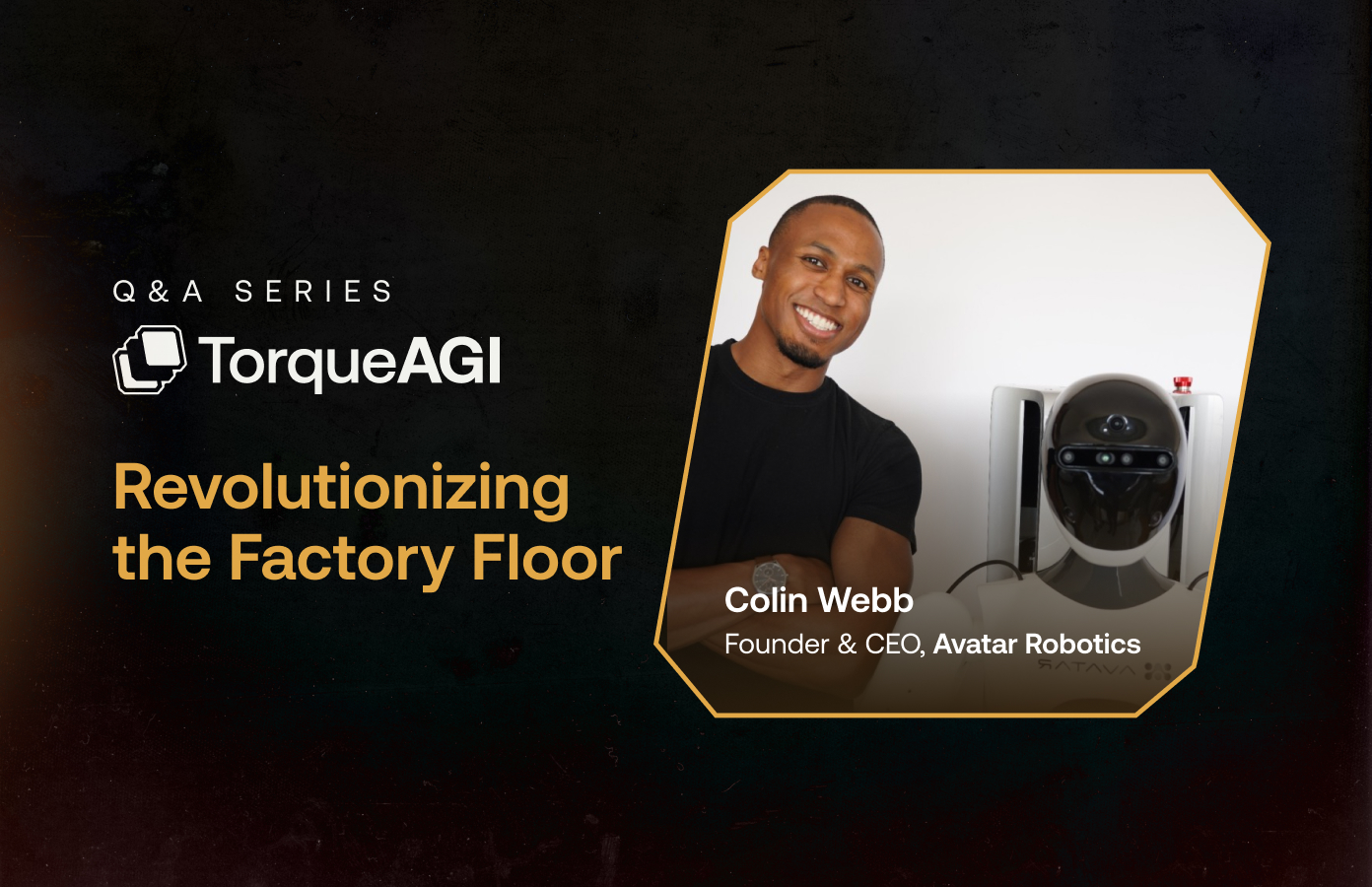
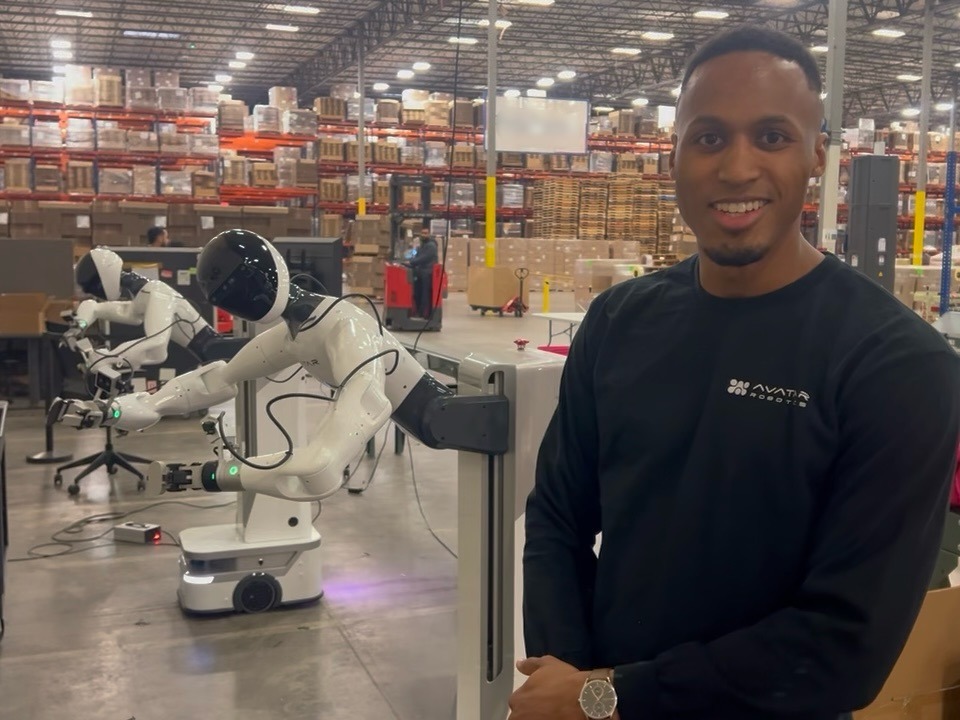
To explore this shift from spectacle to substance, we sat down with Colin Webb, Founder and CEO of Avatar Robotics. Avatar is focused on deploying humanoid robots into live manufacturing, logistics, and warehousing environments, with use cases ranging from handling totes to organizing inventory. Their mission is simple but ambitious: take the limits off labor.
Most recently, Avatar announced a partnership with Productiv 3PL, signaling a move beyond demos and pilots toward real-world, revenue-generating deployments inside 3PL operations.
In this conversation, Colin joins Dr. Ashutosh Saxena, Founder and Chief AI Officer of TorqueAGI, to discuss why humanoid form factors matter now, how Physical AI changes what robots can actually do on the factory floor, and what it will take to scale robots that reliably operate in unstructured industrial environments.
Humanoids Beyond the Hype
Ashutosh Saxena:
Humanoids are having a major moment right now. We’re seeing a wave of attention, investment, and public excitement around human-shaped robots. From your perspective as someone building and deploying them, why do humanoid form factors matter now and where do you think the conversation often misses the mark?
Colin Webb:
The attention is exciting, but what matters is whether these systems can create value in real environments. The reason humanoids matter now is not because they look like humans, it’s because our infrastructure is built for humans. Warehouses, factories, tools, workflows, they’re all designed around the human form factor.
The conversation often misses the operational layer. It’s easy to show a compelling demo. It’s much harder to make a robot show up every day and perform reliably in a production environment.
Why Manufacturing and Logistics Are the Real Test
Ashutosh Saxena:
Avatar is focused on manufacturing, logistics, and warehousing rather than consumer settings. Why are these environments the right proving ground for humanoid robots?
Colin Webb:
Manufacturing and logistics have clear economic drivers and measurable ROI. Labor shortages are real. Turnover is high. Many of the tasks are repetitive and physically demanding — palletizing, repetitive pick-and-pack, inspection cycles, assembly assistance. These are critical workflows, but they’re also hard to staff consistently.
That creates real operational pressure. Companies aren’t looking for novelty. They're looking for ways to maintain throughput and reliability despite workforce constraints.
These environments also provide what I’d call structured chaos. They’re not perfectly controlled, but they’re not random either. Inventory shifts. Layouts evolve. Humans move through the workspace. That makes them ideal for deploying and improving Physical AI systems.
If a humanoid robot can operate in that kind of setting, adapting to variability while contributing meaningful output, you’re not just proving a technical point. You’re expanding capacity. You’re helping remove bottlenecks that limit productivity. And that’s where humanoids start to move from interesting machines to practical infrastructure.
From Demos to Live Robots in the Field
Ashutosh Saxena:
There’s a common criticism that humanoids look impressive in demos but struggle in real deployments. Avatar has robots actively working in the field today. What were the biggest hurdles in moving from controlled demos to live industrial environments?
Colin Webb:
The biggest shift is going from a curated scenario to an environment that doesn’t cooperate. Lighting changes. Inventory shifts. Totes aren’t perfectly aligned. Humans walk through the workspace.
In demos, edge cases are minimized. In production, edge cases are the job. Getting to live deployment means building systems that can recover, adapt, and continue operating when conditions drift.
Physical AI as the Missing Layer
Ashutosh Saxena:
At TorqueAGI, we think about Physical AI as more than perception. It includes reasoning, memory, and action under real-world constraints. From your vantage point, what role does Physical AI play in making humanoids viable for tasks like palletizing, pick-and-pack, inspection, or assembly?
Colin Webb:
Physical AI is the difference between scripted automation and adaptable systems. In a warehouse, no two moments are identical. Objects shift. Packaging varies. Timing changes.
Without reasoning and memory, you end up hard-coding around every exception. That doesn’t scale. Physical AI allows robots to generalize across similar tasks instead of treating every scenario as brand new.
Task Generalization on the Factory Floor
Ashutosh Saxena:
Industrial environments are dynamic. SKUs change, layouts evolve, and edge cases show up constantly. How important is task generalization for humanoid robots in production environments?
Colin Webb:
It’s critical. If you have to reprogram the system every time something changes, you lose the economic advantage. Humanoids need to handle variation — not infinite variation, but enough to make them practical across multiple workflows.
There’s always a balance between specialization and flexibility. But the goal is to deploy robots that can expand their task envelope over time, not stay confined to one narrow function.
Avatar Robotics × Productiv 3PL: Why This Partnership Matters
Ashutosh Saxena:
Your partnership with Productiv 3PL signals that humanoids are beginning to operate in live logistics environments. What motivated that collaboration?
Colin Webb:
We wanted a real operational partner, not a lab environment. Productiv gave us a live setting with real throughput demands and performance expectations.
That partnership represents a shift from proving that robots can work to proving they can deliver measurable value inside ongoing operations.
Scaling Reliability in Unstructured Environments
Ashutosh Saxena:
Reliability is often the difference between a pilot and a scalable deployment. What does “reliable” mean for a humanoid robot operating on a warehouse floor?
Colin Webb:
Reliable means showing up consistently and completing tasks within operational thresholds — throughput, accuracy, uptime.
It’s not perfection. It’s predictability. When operators trust that the system will perform within defined parameters, you can begin scaling.
A Two-Way Conversation: Building the Physical AI Stack
Ashutosh Saxena:
Before we wrap up, I’d love to turn the table. From your perspective deploying humanoids into live industrial environments, what questions do you have for us at TorqueAGI?
Colin Webb:
As we scale deployments, one of the biggest questions is how foundation-level Physical AI systems can accelerate generalization across tasks and environments. How do we shorten the cycle between deployment feedback and system improvement? And how do we build intelligence that adapts fast enough to make humanoids economically viable across multiple workflows?
Ashutosh Saxena:
That’s exactly the core challenge. The way we think about it is that Physical AI has to sit above perception and control. It needs to reason about the state, remember past outcomes, and adapt policies based on what actually happens in the field.
The goal isn’t to hand-engineer around every edge case. It’s to build systems that learn from deployment data and generalize across similar tasks. If a robot learns how to palletize in one facility, that experience should meaningfully accelerate performance in another.
Closing the loop between deployment feedback and model improvement is what turns individual robots into a scalable intelligence layer. That’s where we see the biggest opportunity for collaboration across the stack.
Looking Ahead: The Future of Physical AI and Humanoids
Ashutosh Saxena:
Looking forward, what excites you most about the future of Physical AI and humanoid robotics?
Colin Webb:
What excites me most is how immersive and responsive these systems will become. As Physical AI improves, operating a humanoid robot will feel less like managing a rigid automation system and more like interacting inside a dynamic, real-time environment — almost like a video game.
In a video game, the world responds to your actions instantly. You adapt, you learn the environment, and the system adjusts with you. That’s the direction Physical AI is heading. Instead of pre-programming every movement or exception, robots will increasingly understand context, respond fluidly to change, and recover from unexpected scenarios in real time.
As that capability scales, you move from isolated robotic cells to adaptable, general-purpose systems working across manufacturing and logistics. Warehouses and factory floors won’t need to be redesigned around robots. Robots will operate naturally within human-built infrastructure.
When that happens, humanoids stop being novel machines and start becoming industrial infrastructure. They expand labor capacity, reduce strain on human workers, and allow operations to scale without being constrained by workforce shortages.
The long-term shift isn’t just better automation. It’s creating a more resilient, responsive industrial base — where Physical AI enables robots to operate in the real world with the same adaptability we expect in digital environments.
From Demonstration to Deployment
The shift in humanoid robotics is not about headlines. It's about deployment. Moving from curated demos to robots operating inside live manufacturing and logistics environments requires more than impressive hardware. It requires systems that can adapt to variability, recover from edge cases, and perform reliably under real operational constraints. That is where Physical AI becomes the differentiator.
As humanoids begin contributing to palletizing, pick-and-pack, inspection, and assembly workflows, they move from novelty to infrastructure. In industries facing labor shortages and throughput pressure, the ability to expand capacity without redesigning existing environments is transformative. Manufacturing and logistics are not just early markets, they are the proving ground for scalable, real-world intelligence.
If these systems can operate reliably here, they lay the foundation for broader impact. The future of humanoids will not be defined by isolated demonstrations, but by robots that show up every day, integrate into human-built workflows, and strengthen industrial resilience at scale.
Whether you’re navigating the shift from demos to live production or looking to improve task generalization in unstructured environments, TorqueAGI provides the Physical AI necessary for true industrial reliability. Contact us to schedule a demo and discover how we can add a layer of reasoning and adaptability to your robotic stack.

